Unknown's avatar

About Lori Ericson

An award-winning former reporter who is now trashing everything she learned about writing then, relishing the people she met and the stuff they taught her to write romantic thrillers, rom-coms and more.

Reichs Provides Pure Tension in Latest Thriller

Featured

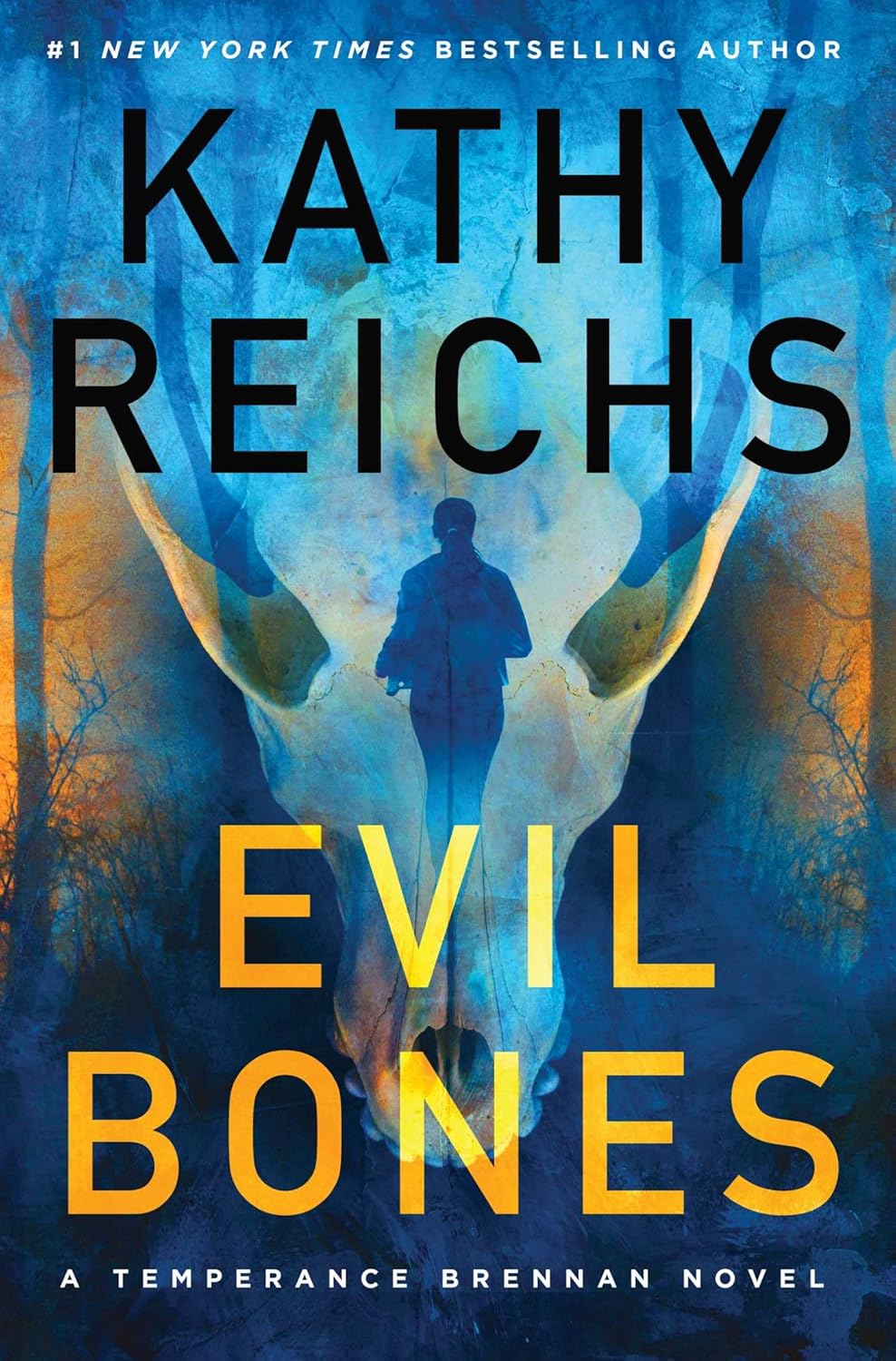
Full of suspense and some scares that more than push the envelope, Kathy Reichs doesn’t disappoint when it comes to the promised ride for readers in her latest Tempe Brennan thriller Evil Bones. Reichs masterfully builds tension throughout the novel, forcing me to set all else aside to finish those last pages. I had to see how Tempe survives this one and solves the who-done-it.

In this blog I offer a different type of book review­—one that’s combined with vocabulary building. In Evil Bones, just released in November, I found plenty of unfamiliar words due to the nature of the detail regarding forensic anthropology. I stayed away from purely medical terms for this this list of unfamiliar words.

From Evil Bones:

Having eaten maybe two bites, she’d planted an elbow on the table, cradled her head in her palm, and commenced macerating the remains of the egg concoction.

macerate: verb, 1. (especially with reference to food) soften or become softened by soaking in a liquid. 2. archaic – cause to grow thinner or waste away, especially by fasting

From Evil Bones:

His dingy white tee was stretched to its full tensile capacity across a frame not yet obese but poised on the edge.

tensile, adjective: 1. relating to tension, 2. capable of being drawn or stretched

From Evil Bones:

Despite my postprandial drowsiness, sleep eluded me.

postprandial, adjective: formal-during or relating to the period after dinner or lunch; medicine-occurring after a meal (an annual postprandial blood glucose test)

From Evil Bones:

Nun pose. The phrase floated back, forgotten for years.

As a kid I’d often pondered the secrets of those billowy recesses. I knew the sleeves served as temporary repositories for tissues, used and unused. But what else? An extra missal? A spare battery? A loaded Glock 19?

missal: noun, a book containing the texts used in the Catholic Mass throughout the year

From Evil Bones:

Was this guy Mom-schmoozing me? Or was he this obsequious with everyone?

obsequious, adjective: obedient or attentive to an excessive or servile degree

 Definitions are typically from the dictionary that comes with my Mac or The New Oxford American Dictionary.

“The word is only a representation of the meaning; even at its best, writing almost always falls short of full meaning. Given that, why in God’s name would you want to make things worse by choosing a word which is only cousin to the one you really wanted to use?” Stephen King, On Writing: A Memoir of the Craft
RACIAL TENSIONS FLARE IN A CALAMITY OF SOULS

Featured

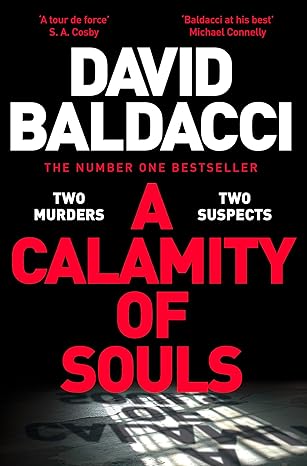
A Calamity of Souls by David Baldacci is a heart-wrenching and tension-filled read of racial prejudice that reminded me of both of the classic American novel To Kill a Mockingbird and Nancy Hartney’s The Blue Bottle Tree. In all three, the emotion levels run high and keep a reader enthralled.

I offer a different type of book review here­—one that’s combined with vocabulary building or sometimes just a fun look at words. For Baldacci’s novel, I chose a legal term I hadn’t heard previously but played heavily in the novel.

From A Calamity of Souls:

“This is absurd!” barked Sam Randolph. “Why would my parents have created this…this tontine device? It makes no sense at all.”

tontine, noun: an annuity shared by subscribers to a loan or common fund, the shares increasing as subscribers die until the last survivor enjoys the whole income. Also, a life insurance plan in which the beneficiaries are those who survive and maintain a policy to the end of a given period.

Origin: mid-18th century: from French, named after Lorenzo Tonti (1630-95), a Neapolitan banker who started such a scheme to raise government loans in France (c.1653).

Check out David Baldacci at https://www.davidbaldacci.com/

 Definitions are typically from the dictionary that comes with my Mac or The New Oxford American Dictionary.

What interesting words have you discovered in your recent reading?

“The word is only a representation of the meaning; even at its best, writing almost always falls short of full meaning. Given that, why in God’s name would you want to make things worse by choosing a word which is only cousin to the one you really wanted to use?” Stephen King, On Writing: A Memoir of the Craft.

Moyes’ Novel Dives into Heart of Family

Featured

We All Live Here is my first Jojo Moyes read, and I’m hooked. She knows how to write women with an honesty that pulls you in for the good, bad and everything in between.

This novel centers on Lila Kennedy, a writer of a book on how to stay happily married, but soon after publication lost her husband to another woman. While she’s trying to recover from the professional embarrassment and the divorce, Lila’s also trying adjust to single parenthood, living with her stepfather after her mother’s death, and the re-emergence of her estranged biological father. Lila and her remaining family struggle with loyalty, love, and forgiveness as truths about the past emerge and their lives evolve in the wake.

In this blog, I offer a different type of book review­—one that’s combined with vocabulary building. In We All Live Here I found a couple of unfamiliar words and an interesting phrase.

From We All Live Here:

She wanted to sleep with him again, and she was terrified of what that might mean. She told him apropos of nothing that she had read a statistic that said 60 percent of all second marriages failed, and that was especially likely if one side had children.

apropos of nothing: phrase, having no relevance to any previous discussion or situation.

From We All Live Here:

He is now wearing a tweed jacket of Bill’s and a cravat.

cravat: noun, a short, wide strip of fabric worn by men around the neck and tucked inside an open-necked shirt. — historical, a necktie

From We All Live Here:

On Wednesdays Bill cooks for everyone, and it’s a shambolic, but cheerful event.

shambolic: adjective, informal, mainly British English, chaotic, disorganized, or mismanaged

If you read and enjoy We All Live Here, check out Jojo Moyes at https://www.jojomoyes.com and pick up her books at your local bookstore.

 Definitions are typically from the dictionary that comes with my Mac or The New Oxford American Dictionary.

“The word is only a representation of the meaning; even at its best, writing almost always falls short of full meaning. Given that, why in God’s name would you want to make things worse by choosing a word which is only cousin to the one you really wanted to use?” Stephen King, On Writing: A Memoir of the Craft
Beth Carter Gifts Romance Readers with Fun Holiday Tales

Featured

I enjoy holiday-themed books this time of year. Last year, I read romance writer Beth Carter’s Miracle on Aisle Two. Then she surprises me with yet another romance out this Christmas!

Carter’s holding an online launch party for The Christmas Fib this Thursday (Dec. 18), per her Facebook page. I just finished reading The Christmas Fib. It’s a fun page turner that starts with Brooke Hamilton opting to relax alone for the holidays and lying to her mother about being ill to make it happen. Shouldering grief for her dad and guilt about the big lie, she hopes to create new holiday memories in the snow-capped mountains of Colorado. When Brooke checks into a quaint inn, this fun holiday story unfolds with lots of wonderful glittering Christmas treats and all the romance you could ask for from Santa. The Christmas Fib may just be more fun than Carter’s first Christmas romance, Miracle on Aisle Two!

As always, I try to highlight a few words for this book review blog. For these two delightful holiday reads, I simply picked words pertaining to the season.

From The Christmas Gift:  “’Mom.’ Tate rolled his eyes. ‘You know I don’t believe in Santa.’

‘In that case, no gifts for you from Old Saint Nick.’

Gift, noun. 1. a thing given willingly to someone without payment; a present.

  • an act of giving something as a present
  • a very easy task or unmissable opportunity

2. a natural ability or talent.

verb, give (something) as a gift, especially formally or as a donation or bequest

  • present (someone) with a gift or gifts
  • endow with

From The Christmas Gift: “I’m planning to make all of your favorite things. You know, those fun treats we always make at Christmastime like chocolate-covered cashews, butterscotch haystacks, and your favorite, chocolate rum pecan pie. I also bought stuff to we could make those pretty holly centerpieces, and—”

Christmastime, noun. the Christmas season. Christmas is a Christian holiday to celebrate the birth of Jesus, the central figure of Christianity.

From Miracle on Aisle Two: Sobbing happy tears, she mumbled, “I love you, too. If I didn’t believe in miracles before, I certainly do now.”

Miracle noun. a surprising and welcome event that is not explicable by natural or scientific laws and is therefore considered to be the work of a divine agency.

  • a highly improbable or extraordinary event, development, or accomplishment that brings very welcome consequences
  • an amazing product or achievement, or an outstanding example of something. 

ORIGIN: Middle English: via Old French from Latin miraculum ‘object of wonder,’ from mirari ‘to wonder,’ from mirus ‘wonderful.’

Check out Beth Carter’s Christmas romances and her Coconuts series onAmazon

Or, see her Facebook at page https://www.facebook.com/authorbethcarter

 Definitions are typically from the dictionary that comes with my Mac or The New Oxford American Dictionary.

“The word is only a representation of the meaning; even at its best, writing almost always falls short of full meaning. Given that, why in God’s name would you want to make things worse by choosing a word which is only cousin to the one you really wanted to use?” Stephen King, On Writing: A Memoir of the Craft.

Henry’s HAPPY PLACE Snicks a Chunk of Heart

Featured

Happy Place by one of my romance favorites, Emily Henry, takes a piece of your heart with this one. The story had me flipping the pages as the tension built between this couple that should be together, was once together, and then split after letting childhood hurts come between them. Henry does wonders with character development, builds a world of unique friends, each bringing something different to the story. I had to see if this sweet couple would get back together with the help of their friends, or would their breakup cause the tight group to fall apart as well. I enjoyed every chapter!

In this blog I offer a different type of book review­—one that’s combined with vocabulary building or sometimes just a fun look at words.

In Happy Place, I noticed a word I rarely see, and the sentence is so yummingly Henry, it had to be included for this review.

From Happy Place:

The second the door snicks shut, I whirl on him, prepared to attack, only to be hit with the full force of his closeness, the strange intensity of being behind a closed door together.

snick, verb: 1- cut a small notch or incision in (something) 2- cause (something) to make a sharp clicking sound, make a sharp clicking sound.

 Definitions are typically from the dictionary that comes with my Mac or The New Oxford American Dictionary.

“The word is only a representation of the meaning; even at its best, writing almost always falls short of full meaning. Given that, why in God’s name would you want to make things worse by choosing a word which is only cousin to the one you really wanted to use?” Stephen King, On Writing: A Memoir of the Craft.

Haig’s Christmas Series Offers Holiday Fun for Young Readers

Featured

The Girl Who Saved Christmas is an absolute fun read for the holidays and would be a great Christmas gift for a younger reader. I’d seen the film adaptation of Matt Haig’s A Boy Called Christmas last year and spotted this gem at the library while looking for middle-grade fiction. I want to read Father Christmas sometime in the coming weeks. I’m sure it’s just as delightful. The stories are full of adventure and Christmas magic. (Side note: I’ve written a middle-grade Christmas book myself that’s set to publish in 2026.)

In this blog I offer a different type of book review­—one that’s combined with vocabulary building. Included here, are a few interesting words I found in The Girl Who Saved Christmas by Matt Haig.

These particular words are not unfamiliar in meaning but are important to the book and appropriate for the coming holiday season:

possibility: noun. a thing that may happen or be the case; the state or fact of being likely or possible; likelihood; a thing that may be chosen or done out of several possible alternatives; unspecified qualities of a promising nature; potential.

From The Girl Who Saved Christmas

“She was the one who had hoped the most that first-ever Christmas. The one who had put enough magic in the air simply by believing in it. And that was before any child in the world had known about Father Christmas. She had believed. Not in him. But in possibility. In the kind of possibility that could mean something like delivering toys to every child on earth could actually happen.”

magic: noun. the power of apparently influencing the course of events by using mysterious or supernatural forces; mysterious tricks, such as making things disappear and appear again, performed as entertainment; a quality that makes something seem removed from everyday life, especially in a way that gives delight. — adjective. used in magic or working magic; having or apparently having supernatural powers. — verb. move, change, or create by or as if by magic.

From The Girl Who Saved Christmas

“I was so happy that Christmas, opening those presents. So, so, so happy. Not because of the presents, but because of the magic that had brought them there. To know magic exists.”

time: noun. 1. the indefinite continued progress of existence and events in the past, present, and future regarded as a whole. 2. a point of time as measured in hours and minutes past midnight or noon. 3. time as allotted, available, or used. 4. An instance of something happening or being done; an occasion. 5. (times) (following a number) expressing multiplication. 6. The rhythmic patter of a piece of music, as expressed by a time signature. — verb. 1. plan, schedule, or arrange when (something) should happen or be done. 2. measure the time taken by (a process, activity, etc., or a person doing it).

From The Girl Who Saved Christmas

“She closed her eyes and thought of time. If only she could go back in time to be with her mother again. Or forward to when she could leave this place.”

 Definitions are typically from the dictionary that comes with my Mac or The New Oxford American Dictionary.

“The word is only a representation of the meaning; even at its best, writing almost always falls short of full meaning. Given that, why in God’s name would you want to make things worse by choosing a word which is only cousin to the one you really wanted to use?”

Stephen King, On Writing: A Memoir of the Craft.

A Scottoline Psychological Thriller Clarifies a Phrase

Featured

A VOCABULARY BOOK REVIEW OF The Unraveling of Julia

The Unraveling of Julia by Lisa Scottoline tells the tale of a young widow who inherits a Tuscan villa and vineyard, plus a load of money. And a lot goes wrong in Scottoline’s psychological thriller style for Julia Pritzker. The mysterious inheritance forces her to face the world again after her husband is murdered in a mugging. Julia struggles with the idea of not knowing why she was named in the will. She does her own investigating and tries to find a possible link to her biological family as well. But once she gets to the villa, a lot of weird stuff happens, and she begins to question her sanity and even worry for her life.

The Unraveling of Julia is full of rich detail of the Tuscan hills where most of the story takes place.

In this blog I offer a different type of book review­—one that’s combined with vocabulary building or sometimes just a fun look at words.

From Scottoline’s thriller, I chose a phrase when that pulled me out of the story just because I have always misunderstood it and likely have never seen it spelled out before. I thought the phrase was “on tenderhooks” and didn’t know where it came from, but got the meaning, sort of. I had to look it up when I saw “on tenterhooks” in The Unraveling of Julia. And then I had to laugh at myself.

From The Unraveling of Julia

“Julia felt on tenterhooks about whether they’d succeed, and her worries about Gianluca gnawed at the back of her mind all day, too.”

“On tenterhooks” is a phrase that, per Merriam-Webster online, refers to “waiting nervously for something to happen.” The word tenter means “a frame used for drying and stretching cloth” and is related to tent, so being “on tenterhooks” compares the tenseness of the stretched fabric to the tension of nervous waiting.

“The word is only a representation of the meaning; even at its best, writing almost always falls short of full meaning. Given that, why in God’s name would you want to make things worse by choosing a word which is only cousin to the one you really wanted to use?” Stephen King, On Writing: A Memoir of the Craft.

BLIND RAGE—An Eerie Ozarks True Crime Tale

Featured

Blind Rage is a true crime story about a murder that happened not far from my home here in The Ozarks. The horrific tale of family jealousy can be blamed on the dearly departed, who adopted a young girl only for appearances. The family dynamic that develops leads to the tragic crime detailed in fine storytelling that had me flipping the pages. 

In this blog, I offer a different type of book review — one that’s combined with vocabulary building. Included here are a few interesting words I found in Blind Rage, written by Anita Paddock and published by Pen-L Publishing.

The definitions here are for just a few words from Blind Rage important for the telling of this story of family horror:

blind rage: noun. violent, uncontrollable anger; an instance of aggressive behavior or violent anger caused by a stressful or frustrating situation.

From the beginning of Blind Rage, where Paddock offers a definition of the term:

“Rage can sometimes lead to a state of mind where the individual is capable of doing things that may normally seem physically impossible.

A person in rage may also experience tunnel vision, muffled hearing, increased heart rate, and hyperventilation.

A person in a state of rage may also lose much of the capacity for rational thought and reasoning and may act violently on impulses until the source of their rage is destroyed.

People in a rage have described experiencing things in slow motion and may suffer a form of amnesia regarding the incident itself.”

— resentment: noun. Bitter indignation at having been treated unfairly. 

From Blind Rage:

“Ruie Ann Park thought there was no one in the world as smart as her Sammie. And through the years at home in Van Buren, Linda knew she was the inferior child, and she buried her resentment and anger deep inside while her brother ignored her and her mother controlled her every move.”

showplace: noun. A place of beauty or interest attracting many visitors.

From Blind Rage

“At first, the seventy-five-year-old widow didn’t realize how badly she was injured but she could feel the sticky blood on her neck and arms. Her head throbbed worse than any migraine she’d ever had, and when she tried to lift it, she couldn’t. Her throat was dry, and she wished for a sip of water. Minutes passed before she lost consciousness, and her last thoughts were of how she would ever get rid of the blood stains in the showplace of Van Buren, Arkansas.”

Here’s a link to Blind Rage directly from Pen-L Publishing : BLIND RAGE

And a link to the book on Amazon:  BLIND RAGE

AND, if you’re so inclined, check out A Lovely Murder, the second book in my Danni Deadline romantic thriller series. A third one is in the works—meaning it’s now pouring out on the page/computer screen. And a 2nd edition of the original A Lovely County will be out soon. Details to come!

A link to A Lovely Murder directly from Pen-L Publishing: A LOVELY MURDER

OR, a link to my book on Amazon: A LOVELY MURDER

What are you reading this week? Do you love a book that challenges you to look up words?

A VOCABULARY BOOK REVIEW: FLY AWAY

Featured

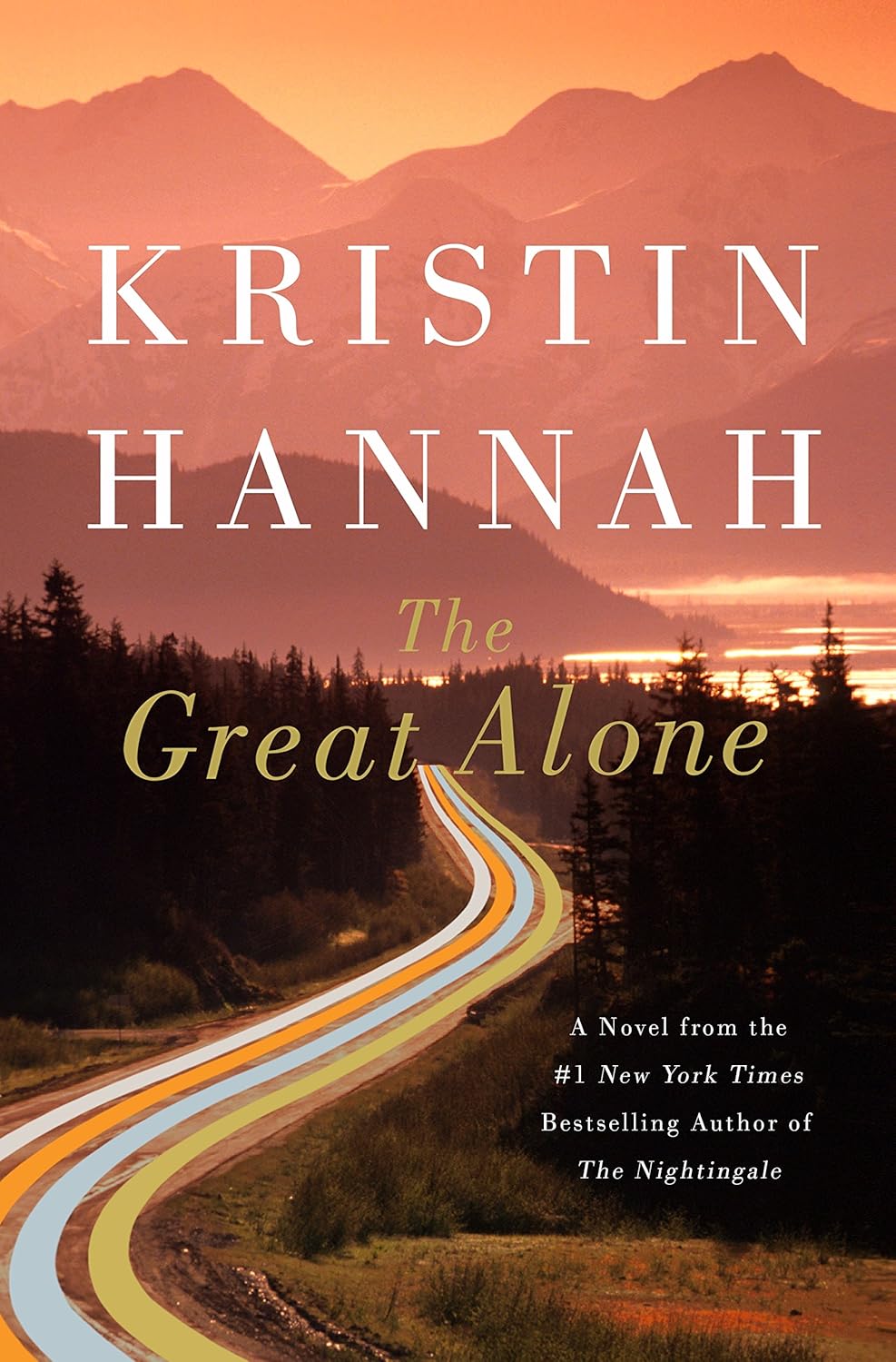
Fly Away is an intense romance by Kristin Hannah with the expected character development that makes Hannah a go-to author. Hannah weaves the human experiences of grief, hope, expectation, obligation, and more into a fantastic tale of love. Not only romantic love, but also a mother’s love, and the love between best friends. Fly Away is also about the promises we keep and the ones we can’t. 

In addition to Fly Away, Hannah is the author of Firefly Lane, now a Netflix series. Published in 2013 by St. Martin’s Press, Fly Away is among many titles by Hannah. Find her on Facebook or at kristinhannah.com. 

I haven’t read them all, but books by Hannah I haven’t read are on my TBR list. I love her writing, her characterization that makes me care, and her descriptions. Her plotting, twists, and turns keep me reading. I can’t comment on Hannah without pointing out the beautiful covers for most of her books, including the cover for Fly Away.

In this blog, I offer a different type of book review — one that’s combined with vocabulary building. The definitions here are for just a few words from Fly Away that I found interesting, unfamiliar, or unusual in use:

grief: noun 1. Deep sorrow, especially that caused by someone’s death. 2. Informal trouble or annoyance. 

From Fly Away

“Grief is a sneaky thing, always coming and going like some guest you didn’t invite and can’t turn away.”

AND

“Johnny closed his eyes. He’d worked so hard in the past few years to move past grief and fashion a new life for his family. He didn’t want to remember that terrible year, but how could he not—especially now?”

flotsam: noun. (Anglo-French flotesom, from Old French floter to float. Of Germanic origin: akin to Old English flotian to float, float ship) (circa 1607) 1. Floating wreckage of a ship or its cargo; broadly: floating debris. 2. a: a floating population (as of emigrants or castaways) b: an accumulation of miscellaneous or unimportant stuff. 

From Fly Away

“When she’d introduced him to her best friend, Kate Mularkey, who’d seemed paler and quieter, a bit of flotsam riding the crest of Tully’s wave, he’d barely noticed. It wasn’t until years later, when Katie dared to kiss him, that Johnny saw his future in a woman’s eyes.”

papasan chair: noun. a bowl-shaped cushioned chair often with a rattan base. 

From Fly Away

“His father-in-law, Bud, sat in the big papasan chair that easily held both boys when they played video games, and Sean, Kate’s younger brother, lay asleep on Will’s bed.”

de rigueur: adjective. (French)(1833) prescribed or required by fashion, etiquette, or custom: proper   

From Fly Away

“Her voice had that brittle sharpness that had become de rigueur since puberty. He sighed; even grief, it seemed, hadn’t softened his daughter. If anything, it had made her angrier.”

 Definitions are typically from the dictionary that comes with my Mac or Merriam Webster.

“The word is only a representation of the meaning; even at its best, writing almost always falls short of full meaning. Given that, why in God’s name would you want to make things worse by choosing a word which is only cousin to the one you really wanted to use?” ― Stephen KingOn Writing: A Memoir of the Craft.

A VOCABULARY BOOK REVIEW: ONE TRUE LOVES

Featured

One True Loves caught my devoted interest in the first chapter. That’s when Emma Blair’s husband, lost at sea in a helicopter crash years before, calls just as she’s finishing up a family dinner with her financé. The plot enfolds two love stories and Emma must make a choice, her forever choice. Author Taylor Jenkins Reid yanks a rope around your heart and keeps it restrained between the pages in this beautifully written tale that could have no better ending.

In addition to One True Loves, published in 2016, Reid has a number of titles under her belt including Daisy Jones &The Six, now a miniseries on Prime video. Visit her website at TaylorJenkinsReid.com for more information. 

In this blog, I offer a different type of book review — one that’s combined with vocabulary building. Included here are a few interesting words I found in One True Loves, written by Taylor Jenkins Reid and published by Washington Square Press, an imprint of Simon & Schuster.

The definitions here are for just a few words from One True Loves that I found interesting, unfamiliar, or unusual in use:

hooligan: noun. (perhaps from Patrick Hooligan—Irish hoodlum in Southwark, London 1898) Ruffian, hoodlum. 

From One True Loves

“To them, I had gone from a precious little girl to a hooligan overnight.”

conciliatory: adjective. 1. a. not flowing in a current or stream (stagnant water) b. Stale 2. Not advancing or developing. 

From One True Loves

“’I’m going to give Eli a conciliatory hug and then, Olive, we can head home,’ she said.”

gamine: noun. (French feminine of gamin) 1. A girl who hangs around on the streets. 2. A small playfully mischievous girl. adjective Of, relating to, or suggesting a gamine.   

From One True Loves

“The only change she can see is my short, blond hair.

‘It’s very gamine.’”

assuage: verb. 1. To lessen the intensity of (something that pains or distresses): ease. 2. Pacify, quiet. 3. To put an end to by satisfying: appease, quench.  

From One True Loves

“It was gestures like that, small acts of intimacy between them, that made me think my parents probably still had sex. I was both repulsed and somewhat assuaged by the thought.”

stagnant: adjective. 1. a. not flowing in a current or stream (stagnant water) b. Stale 2. Not advancing or developing. 

From One True Loves

“People aren’t stagnant. We evolve in reaction to our pleasures and pains.”

 Definitions are typically from the dictionary that comes with my Mac or Merriam Webster.

“The word is only a representation of the meaning; even at its best, writing almost always falls short of full meaning. Given that, why in God’s name would you want to make things worse by choosing a word which is only cousin to the one you really wanted to use?” ― Stephen KingOn Writing: A Memoir of the Craft.