Reichs Provides Pure Tension in Latest Thriller

Featured

Full of suspense and some scares that more than push the envelope, Kathy Reichs doesn’t disappoint when it comes to the promised ride for readers in her latest Tempe Brennan thriller Evil Bones. Reichs masterfully builds tension throughout the novel, forcing me to set all else aside to finish those last pages. I had to see how Tempe survives this one and solves the who-done-it.
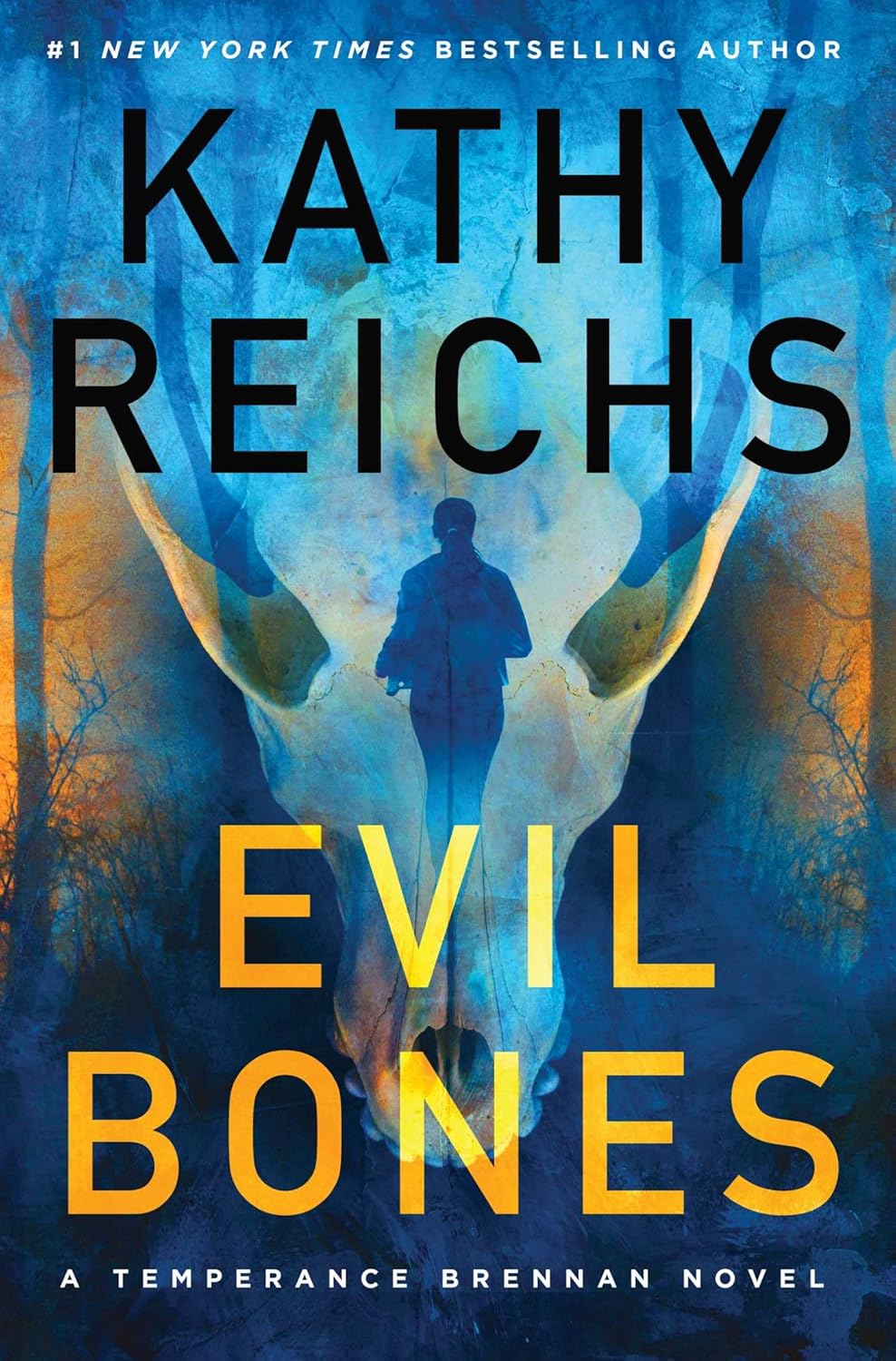
In this blog I offer a different type of book review­—one that’s combined with vocabulary building. In Evil Bones, just released in November, I found plenty of unfamiliar words due to the nature of the detail regarding forensic anthropology. I stayed away from purely medical terms for this this list of unfamiliar words.

From Evil Bones:

Having eaten maybe two bites, she’d planted an elbow on the table, cradled her head in her palm, and commenced macerating the remains of the egg concoction.

macerate: verb, 1. (especially with reference to food) soften or become softened by soaking in a liquid. 2. archaic – cause to grow thinner or waste away, especially by fasting

From Evil Bones:

His dingy white tee was stretched to its full tensile capacity across a frame not yet obese but poised on the edge.

tensile, adjective: 1. relating to tension, 2. capable of being drawn or stretched

From Evil Bones:

Despite my postprandial drowsiness, sleep eluded me.

postprandial, adjective: formal-during or relating to the period after dinner or lunch; medicine-occurring after a meal (an annual postprandial blood glucose test)

From Evil Bones:

Nun pose. The phrase floated back, forgotten for years.

As a kid I’d often pondered the secrets of those billowy recesses. I knew the sleeves served as temporary repositories for tissues, used and unused. But what else? An extra missal? A spare battery? A loaded Glock 19?

missal: noun, a book containing the texts used in the Catholic Mass throughout the year

From Evil Bones:

Was this guy Mom-schmoozing me? Or was he this obsequious with everyone?

obsequious, adjective: obedient or attentive to an excessive or servile degree

 Definitions are typically from the dictionary that comes with my Mac or The New Oxford American Dictionary.

“The word is only a representation of the meaning; even at its best, writing almost always falls short of full meaning. Given that, why in God’s name would you want to make things worse by choosing a word which is only cousin to the one you really wanted to use?” Stephen King, On Writing: A Memoir of the Craft

A VOCABULARY BOOK REVIEW: ONE TRUE LOVES

Featured

One True Loves caught my devoted interest in the first chapter. That’s when Emma Blair’s husband, lost at sea in a helicopter crash years before, calls just as she’s finishing up a family dinner with her financé. The plot enfolds two love stories and Emma must make a choice, her forever choice. Author Taylor Jenkins Reid yanks a rope around your heart and keeps it restrained between the pages in this beautifully written tale that could have no better ending.

In addition to One True Loves, published in 2016, Reid has a number of titles under her belt including Daisy Jones &The Six, now a miniseries on Prime video. Visit her website at TaylorJenkinsReid.com for more information. 

In this blog, I offer a different type of book review — one that’s combined with vocabulary building. Included here are a few interesting words I found in One True Loves, written by Taylor Jenkins Reid and published by Washington Square Press, an imprint of Simon & Schuster.

The definitions here are for just a few words from One True Loves that I found interesting, unfamiliar, or unusual in use:

hooligan: noun. (perhaps from Patrick Hooligan—Irish hoodlum in Southwark, London 1898) Ruffian, hoodlum. 

From One True Loves

“To them, I had gone from a precious little girl to a hooligan overnight.”

conciliatory: adjective. 1. a. not flowing in a current or stream (stagnant water) b. Stale 2. Not advancing or developing. 

From One True Loves

“’I’m going to give Eli a conciliatory hug and then, Olive, we can head home,’ she said.”

gamine: noun. (French feminine of gamin) 1. A girl who hangs around on the streets. 2. A small playfully mischievous girl. adjective Of, relating to, or suggesting a gamine.   

From One True Loves

“The only change she can see is my short, blond hair.

‘It’s very gamine.’”

assuage: verb. 1. To lessen the intensity of (something that pains or distresses): ease. 2. Pacify, quiet. 3. To put an end to by satisfying: appease, quench.  

From One True Loves

“It was gestures like that, small acts of intimacy between them, that made me think my parents probably still had sex. I was both repulsed and somewhat assuaged by the thought.”

stagnant: adjective. 1. a. not flowing in a current or stream (stagnant water) b. Stale 2. Not advancing or developing. 

From One True Loves

“People aren’t stagnant. We evolve in reaction to our pleasures and pains.”

 Definitions are typically from the dictionary that comes with my Mac or Merriam Webster.

“The word is only a representation of the meaning; even at its best, writing almost always falls short of full meaning. Given that, why in God’s name would you want to make things worse by choosing a word which is only cousin to the one you really wanted to use?” ― Stephen KingOn Writing: A Memoir of the Craft.

My Vocabulary Book Review of FORGET ME NOT by Julie Soto

Featured

Forget Me Not is a romantic tale that I picked up at the library and had to include here. The story is very well written with a plot that had me rooting for both lead characters and turning the page to see if they’d finally end up together. One’s a florist, the other a wedding planner, and you can’t get more romantic than that. Author Julie Soto does a captivating job of weaving just enough spicy scenes with conflict over a big wedding that could set them both up for promising professional futures. You’ll have to pick this one up to see if or how they work it out. 

In this blog, I offer a different type of book review — one that’s combined with vocabulary building. Included below are a few interesting flower/plant names I found in Forget Me Not. Julie Soto included several of them, and I found myself looking them up for images after a few scenes. Not until the scene was over, I couldn’t stop reading! 

The definitions here are for just a few words from Forget Me Not that, as it turns out all start with A, and I found them interesting:

astilbe: noun. an Old World plant of the saxifrage family, with plumes of tiny white, pink, or red flowers. ORIGIN — modern Latin, from Greek a- ‘not’ + stilbē, feminine of stilbos ‘glittering’ (because the individual flowers are small and inconspicuous).

From Forget Me Not: “I built a chandelier by suspending a rectangular tray from the ceiling in the back room with a lightweight chain. I filled it with pink baby’s breath and feathery blush flowers from an astilbe.”

amaranth: nounany plant of the genus Amaranthus, typically having small green, red, or purple-tinted flowers. Certain varieties are grown for food. Family Amaranthaceae: several genera, especially Amaranthus 2a purple color. 3an imaginary flower that never fades. ORIGIN — mid 16th century: from French amarante or modern Latin amaranthus, alteration (on the pattern of plant names ending in -anthus, from Greek anthos‘flower’) of Latin amarantus, from Greek amarantos‘ not fading’.

From Forget Me Not: “I shrug. ‘There are so few A-M-A words in the world. Amaranth?’

‘You are conveniently forgetting amazing. What is Amaranth?’

‘I didn’t forget; I disregarded. Amaranth is a plant. Drooping pink flowers that I use in bouquets sometimes.’”

amaryllis: noun. a bulbous plant with white, pink, or red flowers and strap-shaped leaves, of the type genus of the amaryllis family, Amaryllidaceae. A South African plant (Amaryllis belladonna, also called belladonna lily), and (popularly) a tropical South American plant that is frequently grown as a houseplant (hybrids of the genus Hippeastrum, formerly Amaryllis) ORIGIN — modern Latin, from Latin Amaryllis(from Greek Amarullis), a name for a country girl in pastoral poetry.

From Forget Me Not: “‘Amaryllis,’ I say, my voice soft in the quiet shop. I lift my eyes to her, and she’s pressing her lips together, a blush on her cheeks, a stain on her neck as vibrant as the Red Pearl amaryllis. ‘Is your mother a fan of musicals, or…?’

Her eyes sparkle again. ‘How does someone like you know a minor character from The Music Man.’”

 Definitions are typically from the dictionary that comes with my Mac or The New Oxford American Dictionary.

“The word is only a representation of the meaning; even at its best, writing almost always falls short of full meaning. Given that, why in God’s name would you want to make things worse by choosing a word which is only cousin to the one you really wanted to use?” ― Stephen KingOn Writing: A Memoir of the Craft.