Haig’s Christmas Series Offers Holiday Fun for Young Readers

Featured

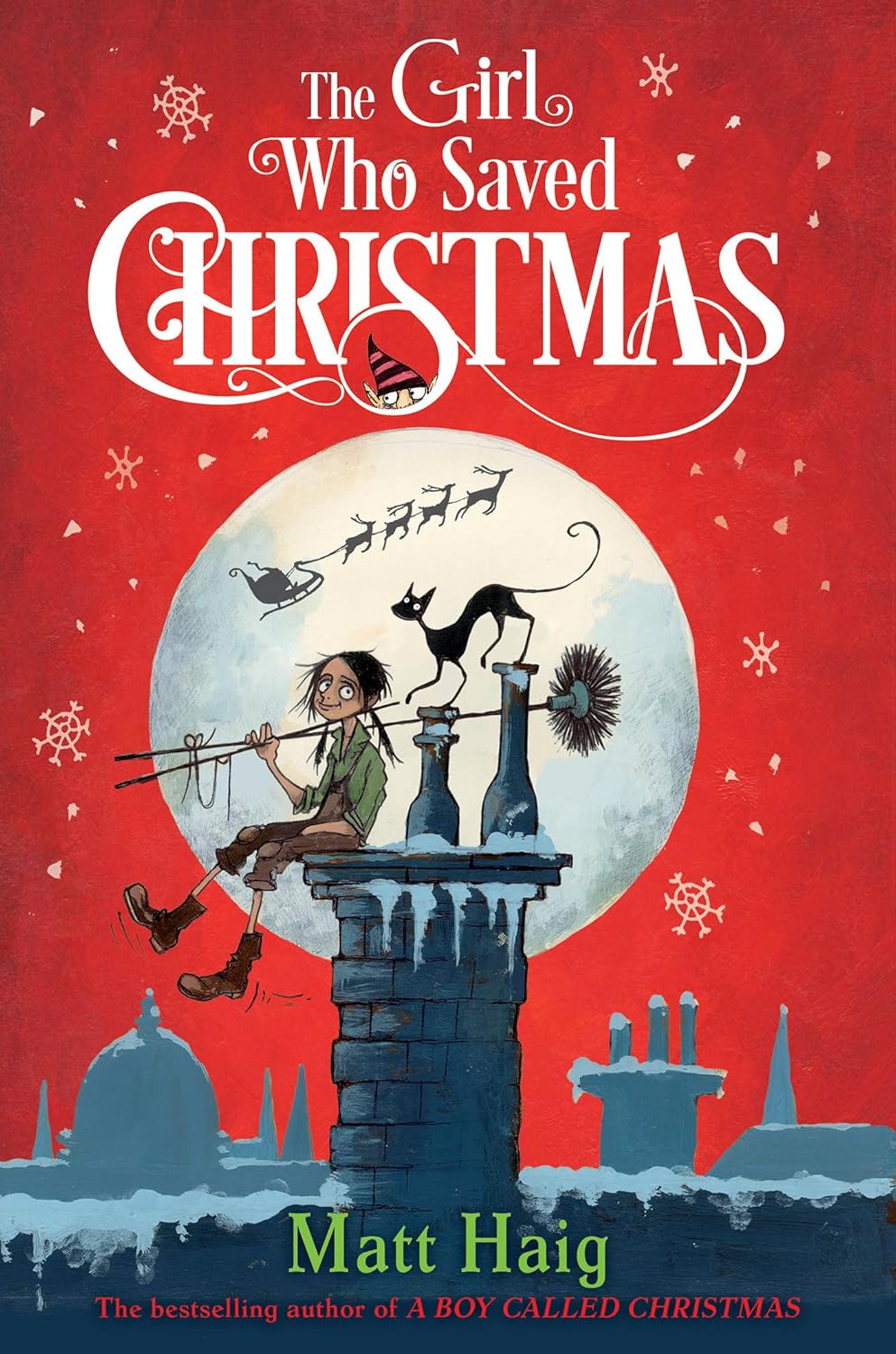
The Girl Who Saved Christmas is an absolute fun read for the holidays and would be a great Christmas gift for a younger reader. I’d seen the film adaptation of Matt Haig’s A Boy Called Christmas last year and spotted this gem at the library while looking for middle-grade fiction. I want to read Father Christmas sometime in the coming weeks. I’m sure it’s just as delightful. The stories are full of adventure and Christmas magic. (Side note: I’ve written a middle-grade Christmas book myself that’s set to publish in 2026.)

In this blog I offer a different type of book review­—one that’s combined with vocabulary building. Included here, are a few interesting words I found in The Girl Who Saved Christmas by Matt Haig.

These particular words are not unfamiliar in meaning but are important to the book and appropriate for the coming holiday season:

possibility: noun. a thing that may happen or be the case; the state or fact of being likely or possible; likelihood; a thing that may be chosen or done out of several possible alternatives; unspecified qualities of a promising nature; potential.

From The Girl Who Saved Christmas

“She was the one who had hoped the most that first-ever Christmas. The one who had put enough magic in the air simply by believing in it. And that was before any child in the world had known about Father Christmas. She had believed. Not in him. But in possibility. In the kind of possibility that could mean something like delivering toys to every child on earth could actually happen.”

magic: noun. the power of apparently influencing the course of events by using mysterious or supernatural forces; mysterious tricks, such as making things disappear and appear again, performed as entertainment; a quality that makes something seem removed from everyday life, especially in a way that gives delight. — adjective. used in magic or working magic; having or apparently having supernatural powers. — verb. move, change, or create by or as if by magic.

From The Girl Who Saved Christmas

“I was so happy that Christmas, opening those presents. So, so, so happy. Not because of the presents, but because of the magic that had brought them there. To know magic exists.”

time: noun. 1. the indefinite continued progress of existence and events in the past, present, and future regarded as a whole. 2. a point of time as measured in hours and minutes past midnight or noon. 3. time as allotted, available, or used. 4. An instance of something happening or being done; an occasion. 5. (times) (following a number) expressing multiplication. 6. The rhythmic patter of a piece of music, as expressed by a time signature. — verb. 1. plan, schedule, or arrange when (something) should happen or be done. 2. measure the time taken by (a process, activity, etc., or a person doing it).

From The Girl Who Saved Christmas

“She closed her eyes and thought of time. If only she could go back in time to be with her mother again. Or forward to when she could leave this place.”

 Definitions are typically from the dictionary that comes with my Mac or The New Oxford American Dictionary.

“The word is only a representation of the meaning; even at its best, writing almost always falls short of full meaning. Given that, why in God’s name would you want to make things worse by choosing a word which is only cousin to the one you really wanted to use?”

Stephen King, On Writing: A Memoir of the Craft.

BLIND RAGE—An Eerie Ozarks True Crime Tale

Featured

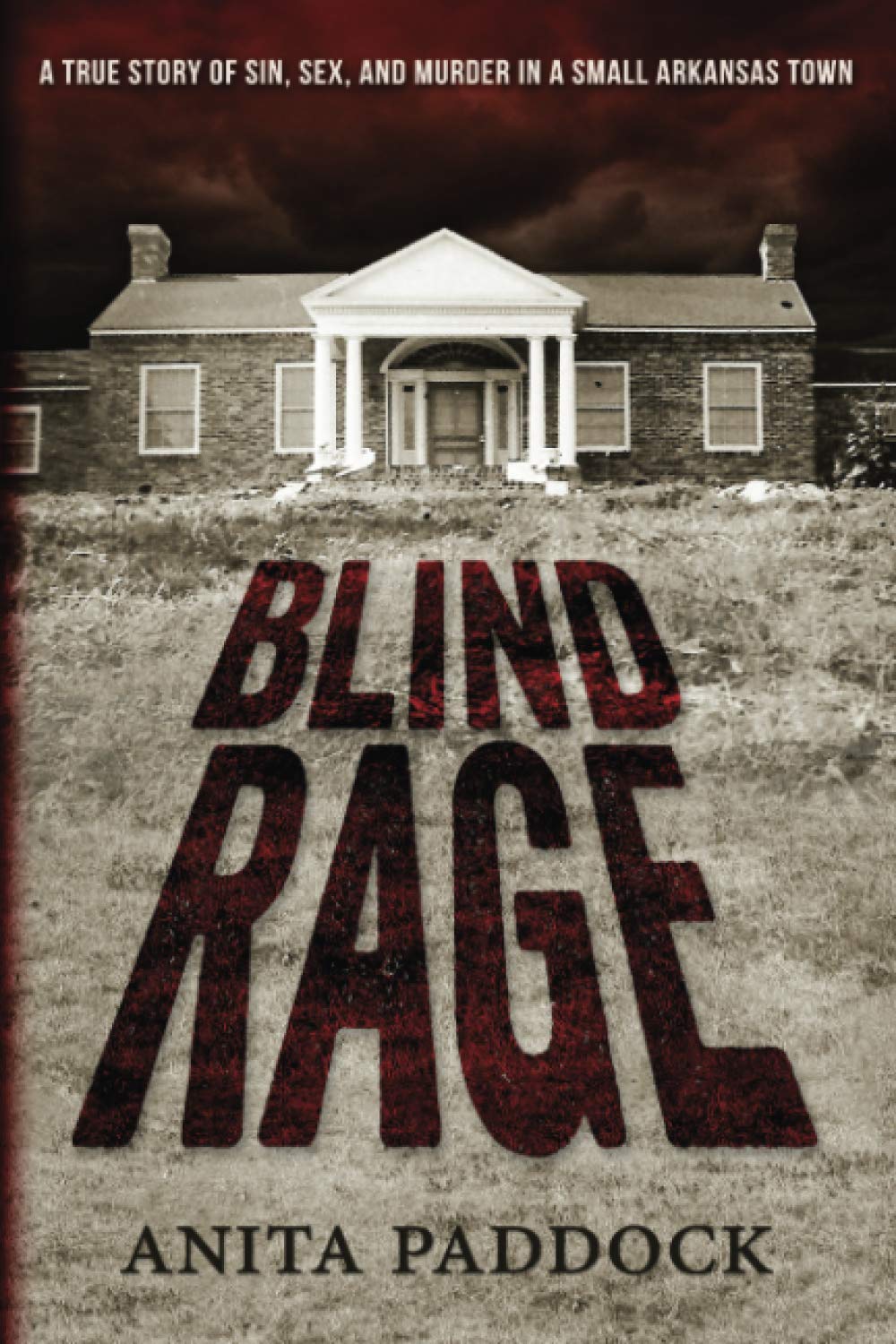
Blind Rage is a true crime story about a murder that happened not far from my home here in The Ozarks. The horrific tale of family jealousy can be blamed on the dearly departed, who adopted a young girl only for appearances. The family dynamic that develops leads to the tragic crime detailed in fine storytelling that had me flipping the pages. 

In this blog, I offer a different type of book review — one that’s combined with vocabulary building. Included here are a few interesting words I found in Blind Rage, written by Anita Paddock and published by Pen-L Publishing.

The definitions here are for just a few words from Blind Rage important for the telling of this story of family horror:

blind rage: noun. violent, uncontrollable anger; an instance of aggressive behavior or violent anger caused by a stressful or frustrating situation.

From the beginning of Blind Rage, where Paddock offers a definition of the term:

“Rage can sometimes lead to a state of mind where the individual is capable of doing things that may normally seem physically impossible.

A person in rage may also experience tunnel vision, muffled hearing, increased heart rate, and hyperventilation.

A person in a state of rage may also lose much of the capacity for rational thought and reasoning and may act violently on impulses until the source of their rage is destroyed.

People in a rage have described experiencing things in slow motion and may suffer a form of amnesia regarding the incident itself.”

— resentment: noun. Bitter indignation at having been treated unfairly. 

From Blind Rage:

“Ruie Ann Park thought there was no one in the world as smart as her Sammie. And through the years at home in Van Buren, Linda knew she was the inferior child, and she buried her resentment and anger deep inside while her brother ignored her and her mother controlled her every move.”

showplace: noun. A place of beauty or interest attracting many visitors.

From Blind Rage

“At first, the seventy-five-year-old widow didn’t realize how badly she was injured but she could feel the sticky blood on her neck and arms. Her head throbbed worse than any migraine she’d ever had, and when she tried to lift it, she couldn’t. Her throat was dry, and she wished for a sip of water. Minutes passed before she lost consciousness, and her last thoughts were of how she would ever get rid of the blood stains in the showplace of Van Buren, Arkansas.”

Here’s a link to Blind Rage directly from Pen-L Publishing : BLIND RAGE

And a link to the book on Amazon:  BLIND RAGE

AND, if you’re so inclined, check out A Lovely Murder, the second book in my Danni Deadline romantic thriller series. A third one is in the works—meaning it’s now pouring out on the page/computer screen. And a 2nd edition of the original A Lovely County will be out soon. Details to come!

A link to A Lovely Murder directly from Pen-L Publishing: A LOVELY MURDER

OR, a link to my book on Amazon: A LOVELY MURDER

What are you reading this week? Do you love a book that challenges you to look up words?

Her Name Was Rose

Featured

Her Name Was Rose is a wild ride of a psychological thriller that caught me up in the first chapter and kept my head spinning until the surprising turn of an end. Some of the language can be attributed to the novel’s setting on the Donegal Coastline of Ireland. 

In this blog, I offer a different type of book review­—one that’s combined with vocabulary building. Included here, are a few interesting words I found in Her Name Was Rose by Claire Allan.

The following includes just a few words from Her Name Was Rose that I found interesting:

eejit: noun. Informal Irish and Scottish form of idiot. 

From Her Name Was Rose

“I want to be a complete madly-in-love eegit and wear a T-shirt that says I love Owen & Owen loves me! on it.”

klaxon: noun. <Trademark> An electric horn or a similar oud warning device. Origin — Early 20th Century from the name of the manufacturing company.

From Her Name Was Rose

“She’d spoken to my family, for God’s sake, sounded the ‘Emily is going off the deep end’ klaxon.”

 Definitions are typically from the dictionary that comes with my Mac or The New Oxford American Dictionary.

“The word is only a representation of the meaning; even at its best, writing almost always falls short of full meaning. Given that, why in God’s name would you want to make things worse by choosing a word which is only cousin to the one you really wanted to use?” ― Stephen KingOn Writing: A Memoir of the Craft

MY VOCABULARY BOOK REVIEW

This blog offers a different type of book review­—one that’s combined with vocabulary building. Words used in an interesting way or unfamiliar words are chosen for this blog.

If You Walk Long Enough

By Nancy Hartney

Nancy Hartney has a unique southern voice that immediately draws you into the lives she’s created as if each is a family member you know well. Her characters make you feel their pain, their joy, their struggles, and triumphs. Before you know it, you’re lost in the story and have to know more because you either love them or hate them to your core!

Hartney is known for her captivating short stories and commentary on southern life, particularly anything horses. Her work can be found in publications throughout the south. This is her first novel, but she has previously published two short story collections: Washed in the Water, and If the Creek Don’t Rise. Both are treasures of exemplary storytelling.

If You Walk Long Enough proves that Hartney’s talent for storytelling thrives in the longer format. The novel tells the story of two Marines returning home from Vietnam to find a different reality than what they left in the tobacco fields of South Carolina. We see how they’ve changed as well as how each struggles to meld back into a normal life despite rampant racism, struggling family life, lost love, and their war-ravaged mental states.

Nancy Hartney’s first novel is available in select bookstores and at https://www.amazon.com/If-You-Walk-Long-Enough/dp/1509234624

A Few Words from If You Walk Long Enough:

  • Nattered, Natter: verb. To talk incessantly; chatter. noun. A conversation; chat. 

If You Walk Long Enough, Page 8: Blue jays nattered around the bird feeder, keeping the smaller finches and sparrows at bay.

  • Gullah: noun1. A member of a population of Black Americans inhabiting the Sea Islands and the coastal regions of South Carolina, Georgia, and northeastern Florida. 2. A creolized form of English spoken by the Gullahs, containing many words and grammatical features derived from African languages. 

If You Walk Long Enough, Page 8:  Ellie paused, and twisted the phone cord around her hand, released it, and grew sharp. “Diana and I work together. On the Chamber’s Gullah project. She’s a hired consultant. The whole project’s for tourism. And historical preservation. That’s all.”

  • Farrowing, Farrow: noun1. A litter of pigs. / verb 1. To give birth to (a litter of pigs) or bring forth young. / adj. 1. Not pregnant – generally when referring to a cow.

and

  • Shoat: noun1. A piglet recently weaned, usually less than a year old.

If You Walk Long Enough, Page 61:  Their place, five acres including the clapboard house, nestled in a cluster of trees, mostly oaks with several pecan trees and a black walnut on the east side. A farrowing pen and shoat closure sat behind the house with a vegetable garden taking a chunk of the remaining land. 

  • Disquiet: transitive verb1. To take away the peace or tranquility of. 2. Disturb 3. Alarm / noun1. A lack of peace or tranquility. 2. Anxiety / adjective1. uneasy

If You Walk Long Enough, Page 63:  A vague sense of disquiet settled on him whenever whites were around. He resented being treated as if uneducated, a non-person. He watched Reid approach, and, finally, as an afterthought, spoke.

  • Klicks, Klick: noun1. A synonym for kilometer commonly used by the U.S. and U.K. military, which use the metric system almost exclusively for communication with allied forces. 

If You Walk Long Enough, Page 184:  Several klicks outside his base camp, Reid had passed a makeshift Vietnamese civilian clinic compound. A Quonset hut sat among a jumble of small sheds and storage areas, covered with tattered pieces of plastic and corrugated metal. A freestanding tent, open sides yet suffocatingly hot, offered shade for the weekly medicine and food distribution. Scattered crude shelters housed the families of wounded and sick, until they either died, or found a way back to their village. Outside cooking rings, in various stages of use, smoked constantly, like trash burn-barrels dotting Reid’s rural Carolina homescape. 

  • Plumeria: noun1. Known as frangipani or Lei flowers, is a genus of flowering plants in the family Apocynaceae. Most species are deciduous shrubs or small trees native to tropical regions. 

If You Walk Long Enough, Page 202:  The whoomph of choppers, crinkle of body bags, and slap of Uncle Ho sandals became one sound. Metallic smells blended, hung unpleasant in the air overwhelming the delicate perfume of plumeria. Everything merged.

  • Abdication, Abdicate: verb1. To cast off, discard. 2. To relinquish (as sovereign power) formally. / intransitive verb1. To renounce a throne, high office, dignity, or function.

If You Walk Long Enough, Page 257:  He flipped the lighter open, lit up, and clicked it closed. He cupped the tip of his cigarette in his hands, hid the bright glow, took deep a drag, and exhaled. “Chinese filtered into the Nguyen dynasty centuries ago. They are the ones that forced the French abdication and started that bloody damn civil war. Then here we come, men-boys strutting along, waving guns, ready to save the world from Communism.”

Definitions are a mix from Merriam Webster’s, The New Oxford American Dictionary and others.

FULL and humble DISCLOSURE: I’m truly honored to say Nancy is a beloved friend. We share a writing critique group, a publisher, and a love for the craft. She’s also a retired librarian for the Fayetteville Public Library, where both my daughters were lucky enough to work part-time as library pages while students in Fayetteville, Arkansas. Don’t let that diminish a word I’ve said about this fantastic storyteller or you’ll miss out on a great reading experience. 

Find out more about this fantastic author at nancyhartney.com.

Nancy Hartney, author and poet

“The word is only a representation of the meaning; even at its best, writing almost always falls short of full meaning. Given that, why in God’s name would you want to make things worse by choosing a word which is only cousin to the one you really wanted to use?” ― Stephen KingOn Writing: A Memoir of the Craft

The Language of Eldercare

It’s been quite some time since I’ve officially blogged. Life!

To get back on my feet (or back at my writing desk), I’ll use this blog to define a few words I’ve learned the last few years caring for my elderly mother.

Most of the definitions below are from Merriam-Webster.com and are narrowed to the eldercare issues that have consumed my life these past four years.

Dementia: noun. A usually progressive condition marked by the development of multiple cognitive deficits (such as memory impairment, aphasia, and the inability to plan and initiate complex behavior).

Transient Ischemic Attack (a.k.a. ministroke): noun. A brief episode of cerebral ischemia (obstructed blood flow) that is usually characterized by temporary blurring of vision, slurring of speech, numbness, paralysis, or syncope (loss of consciousness) and is often predictive of a serious stroke. Abbreviated as TIA.

Hallucination: noun. A sensory perception (such as visual image or a sound) that occurs in the absence of an actual external stimulus and usually arises from neurological disturbance or in response to drugs.

Cognitive: adjective. Of, relating to, or involving conscious intellectual activity (such as thinking, reasoning, or remembering).

Mom having fun at the casino in healthier times just a few years ago.

Respite: adjective. Providing or being temporary care in relief of a primary caregiver.

Atrophy: noun. Decrease in size or wasting away of a body part or tissue. Also, a wasting away or progressive decline.

Palliative: adjectiveSomething that palliates. From the verb, palliate: To reduce the violence of (a disease). Also, to ease (symptoms) without curing the underlying disease.

Hospice: noun. A program designed to provide palliative care and emotional support to the terminally ill in a home or homelike setting so that quality of life is maintained and family members may be active participants in care. Also, a facility that provides such a program.

PACE: proper noun. PACE stands for Program of All-Inclusive Care for the Elderly. PACE is a national program working with nursing home-eligible individuals to provide day programs, general support, and medical care to keep them in their homes longer. It’s a Medicare/Medicaid benefit.

PACE of the Ozarks, the northwest Arkansas organization, has been a blessing for me and my mother!

Thanks for reading! I expect to soon return to my usual book review blog.

For more information about author Lori Ericson publications, including her Danni Deadline Thrillers, visit her on Amazon at https://www.amazon.com/Lori-Ericson/e/B00S5MJGM8/ref=dp_byline_cont_pop_ebooks_1

Or try the QR code below:

Book of Words: The Math Tutor by Robert Laurence

This blog offers a different type of book review­—one that’s combined with vocabulary building. Included here, following a short review, are a few interesting words I found in The Math Tutor by Robert Laurence.

Laurence’s main character, Sam Butler, is a retired professor of law and a widower who finds his life turned upside down after agreeing to tutor a home-schooled neighbor. Ellie, the sheltered young girl, takes to Butler’s life of caring for off-the-track Thoroughbreds and his enjoyment of state university track events. But Butler is also asked to mentor a law professor struggling to be published in his field. Laurence does an excellent job pulling the reader into the character’s psyche without overdoing it. We feel Butler’s emotions as he confronts difficult people, becomes injured and dependent on those around him, gains respect for Ellie’s young curious mind, and as he loses a very rewarding part of his life. This isn’t my usual mystery/thriller read, but I loved the story and Laurence’s ability to keep your attention glued to the page.

Just a Few Words from The Math Tutor:

  • Punctilio: noun. (Italian & Spanish; Italian puntigliopoint of honor, scruple, frm Spanish Puntillo, from diminutive ofpuntopoint, from Latinpunctum) (1596) 1 : a minute detail of conduct in a ceremony or in observance of a code 2 : careful observance of forms (as in social conduct) The adjective, punctilious: marked by or concerned about precise accordance with the details of codes or conventions. Synonym: careful   The Math Tutor, Page 140: “’Not honesty alone, but the punctilio of an honor the most sensitive.’ But I’m not sure Gwen would agree that the not-honesty-alone part would apply to her. I don’t believe she thinks she has any higher obligation to tell the truth than the rest of us.”
  • Perspicacity: noun. The quality of having a ready insight into things; shrewdness. The adjective perspicacious is defined as “of acute mental vision or discernment: keen.” Synonym: shrewd.  The Math Tutor, Page 160: Rose raised his eyebrows to Lynda, who said. “I’d believe her. I’ve stopped being surprised by her perspicacity.”
  • Pedagogic: adjective.Of, relating to, or befitting a teacher or education.  The Math Tutor, Page 298: “I said that factoring was just like picking all of the oranges out of a basket full of apples, oranges and plums, which I thought was nearly brilliant pedagogic device, though she didn’t, probably because you didn’t say it.”
  • Dreadnought: noun.1 : a warm garment of thick cloth. 2 (Dreadnought, British battleship) : Battleship. 3 : one that is among the largest or most powerful of its kind. The Math Tutor, Page 233: “By the way. I looked up the origins of the word ‘dreadnaught.’ There was a British warship First World War vintage, of that name. H.M.S. Dreadnought, O-U-G-H-T. But Webster’s finds A-U-G-H-T an acceptable variation, though perhaps archaic. I thought you’d want to know.”
  • Entropy: noun.1 : a measure of the unavailable energy in a closed thermodynamic system that is also usually considered to be a measure of the system’s disorder and that is a property of the system’s state and is related to it in such a manner that a reversible change in heat in the system produces a change in the measure which varies directly with the heat change and inversely with the absolute temperature at which the change takes place; Broadly: the degree of disorder or uncertainty in a system. 2 a : the degradation of the matter and energy in the universe to an ultimate state of inert uniformity. b : a process of degradation or running down or a trend to disorder. Synonyms: chaos, disorganization, randomness  The Math Tutor, Page 216: Sam shrugged. “Things fall apart. The universe is winding down. Eventually that dike will fail and the water will head downhill. If you want to be precise, entrophy is on the increase.” 

“What was that word?” “Entropy.”

“Which is…?”

“A measure of the disorder around us. Which is increasing. Everything tends toward confusion and collapse. Every crystal vase on the Earth is destined by the Second Law eventually to break.”


Definitions are typically fromThe New Oxford American Dictionarythrough Kindleor Wikipedia.

“The word is only a representation of the meaning; even at its best, writing almost always falls short of full meaning. Given that, why in God’s name would you want to make things worse by choosing a word which is only cousin to the one you really wanted to use?”

Stephen King, On Writing: A Memoir of the Craft
What interesting words have you taken note of lately?

Book of Words: November’s Past by A.E. Howe

This blog offers a different type of book review­—one that’s combined with vocabulary building.

Included here, following a short review, are a few interesting words I found in November’s Past, the first in the Larry Macklin Mystery Series by writer A.E. Howe. Howe released November’s Past along with December’s Secrets in May, 2016, and since has produced another five books in the series: January’s Betrayal, February’s Regrets, March’s Luck, April’s Desires, and May’s Danger. Mystery fans are eating it up and sending Howe to as high as #18 in Kindle Police Procedurals, according to Amazon ranking information.

Cover image provided by Author A.E. Howe.

I’ve read several in Howe’s series and love the sometime reluctant detective Larry Macklin. November’s Past introduces Macklin as an investigator in rural Florida, whose father is the local sheriff. That connection doesn’t always work in the detective’s favor as he faces criticism from co-workers and his own undeserved lack of confidence. In this first book, Macklin investigates the murder of a mutilated stranger and finds a connection to a recent arson investigation. He then links both crimes to a local group of former high school friends that includes his own dad. One by one, he eliminates suspects and wonders if the crime can be solved. Howe does an excellent job building his characters and helping the reader feel for them despite their flaws, especially Macklin. I plan to continue making my way through this series and may catch up with Howe before he fills every month in the calendar with intrigue and fascinating characters.

Words from November’s Past:

Macadam: n. broken stone of even size used in successively compacted layers for surfacing roads and paths, and typically bound with tar or bitumen. <Special Usage> a stretch of road with such a surface.  “This macadam makes it hard to pick up any tire tracts, but, on the good news side, if you can find the vehicle sooner rather than later, we might find some of the macadam stuck in the tire treads.”

 Valkyrie: n. each of Odin’s twelve handmaidens who conducted the slain warriors of their choice from the battlefield to Valhalla. <Origin> from Old Norse Valkyrja, literally ‘chooser of the slain.’  “He was very glad that we had excluded him from the morning visit from the Valkyrie.”

Flakka: n. Pyrrolidinopentiophenone is a synthetic stimulant of the cathinone class developed in the 1960s that has been sold as a designer drug. Colloquially, it is sometimes called flakka or gravel.  “Of course molly was already being replaced by flakka and whatever else someone wanted to use to get high.”

 Tar Baby: n. A dummy made of tar, which cannot be struck without getting oneself hopelessly stuck to it from the story Mr. Rabbit and Mr. Fox by Joe Harris, as told by his fictional narrator, Uncle Remus. Tar baby has become short hand for a situation better avoided than confronted. (from the online Urban Dictionary)  “I was beginning to think this was turning into a Tar Baby situation.”

Debonair: adj. (of a man) confident, stylish, and charming.  “Mauser dragged me over to her, making it impossible for me to act suave or debonair.”

Harridan: n. a strict, bossy, or belligerent old woman: a bullying old harridan.  “’Yeah, I’ll call Tim and see if he can be there to help control the harridan.’”

 Autocratic adj. of or relating to a ruler who has absolute power. <Special Usage> taking no account of other people’s wishes or opinions; domineering.  “Dad can be a bit autocratic.”

 Nepotistic, adjective form of Nepotitism: n. the practice among those with power or influence of favoring relatives or friends, especially by giving them jobs.  “I could tell that he wanted to make a snide remark in a nepotistic vein, but was resisting the urge with difficulty”

Definitions are typically from The New Oxford American Dictionary through Kindle or Wikipedia.

“The difference between the almost right word and the right word is… the difference between the lightning bug and the lightning.” — Mark Twain

What interesting words have you taken note of lately?

BOOK OF WORDS: Almost Dead by Lisa Jackson

This blog offers a different type of book review­—one that’s combined with vocabulary building.

Included here, following a short review, are a few interesting words I found in Almost Dead, one of dozens of novels New York Times best-selling author Lisa Jackson has under her belt. In researching for this blog, I was surprised to learn that she and another author I love to read, Nancy Bush, are sisters.

Almost Dead is the story of a young mother who’s awash in grief at the sudden loss of her grandmother. Cissy Cahill thinks that grief is making her lose her mind when she hears footsteps and senses strange shadows in the family’s San Francisco home. Then other members of the affluent family suffer sudden brutal deaths. Cissy is forced to dig into the family history to find answers and hope to discover the killer. Almost Dead kept me guessing until the surprise twist in the end, like Jackson’s writing often does.


A Few Words from Almost Dead:

Rabbit-Warren: n. a series of underground tunnels where rabbits live; a building or place with many connected rooms, passages, etc., where you can get lost very easily.  “The real work took place behind a solid-core door that led to rabbit-warren work spaces, of which Sybil Tomini’s was one of the largest.”

 Disabused: v. persuade (someone) that an idea or belief is mistaken  “‘It wasn’t all that terrific,’ Cissy disabused them. ‘We Cahills seem to have trouble in the happiness department.’”

Progeny: n. a descendant or the descendants of a person, animal, or plant; offspring.  “They all knew that was wrong, all realized that her father, and all of his progeny, had been scammed by that vile grandfather of Cissy’s.”

 Stygian: adj. of or relating to the Styx River. <SPECIAL USAGE> Poetic/Literary very dark.  “All the while she eyed the shadows and stygian umbras; the wet, shivering plants; the dark sheltered nooks where the exterior corners of the house met.”

Umbras: n. the fully shaded inner region of a shadow cast by an opaque object esp. the area on the earth or moon experiencing the total phase of an eclipse.  “All the while she eyed the shadows and stygian umbras; the wet, shivering plants; the dark sheltered nooks where the exterior corners of the house met.”

Moue: n. a pouting expression used to convey annoyance or distaste.  “Marla made a moue of distaste at the memories of her mother-in-law.”

 Definitions are typically from The New Oxford American Dictionary through Kindle or internet research, including Wikipedia.

“The difference between the almost right word and the right word is… the difference between the lightning bug and the lightning.” — Mark Twain

“The word is only a representation of the meaning; even at its best, writing almost always falls short of full meaning. Given that, why in God’s name would you want to make things worse by choosing a word which is only cousin to the one you really wanted to use?” — Stephen King, On Writing

What interesting words have you taken note of lately?

Book of Words: Finding Lizzy Smith by Susan Keene

This blog offers a different type of book review­—one that’s combined with vocabulary building. Included here, following a short review, are a few interesting words I found in Finding Lizzy Smith.

Finding Lizzy Smith is a complex riddle that perplexes the reader all the way to the surprising climax. Susan Keene’s story includes a likeable protagonist faced with major challenges, even a serious guilt complex over an incident in the past. That past comes back to haunt private investigator Kate Nash while she’s struggling with the unexplained murder of her husband. Nash is forced to search for a friend that may have been kidnapped, then other friends start turning up dead. Is all this trouble, even her husband’s death, related to Nash’s old mistake? I liked this character, sympathized with her guilt, and urged her on as she discovers the unexpected truth. This is the first book of the Kate Nash Mysteries, and the next is bound to be as exciting and rewarding with Keene’s talented writing style.

Words from Finding Lizzy Smith:

Kibitzed: v. look on and offer unwelcome advice, esp. at as a card game. speak informally; chat. We sorted the mail, answered all the phone messages, and kibitzed about the events of the night before.”

Geocaching: n. the recreational activity of hunting for and finding a hidden object by means of GPS coordinates posted on a Web site. Anymore, looking for reward money is like geocaching, everyone is doing it.”

Planchette: n. a small board supported on casters, typically heart-shaped and fitted with a vertical pencil, used for automatic writing and in séances. If the planchette begins to move in a figure eight, it means an evil spirit has control of the board.”

Effeminate: adj. (of a man) having or showing characteristics regarded as typical of a woman; unmanly. “He was a short, effeminate man with a balding head and a potbelly.”

Rede: n. advice or counsel given by one person to another; what is your rede? / v. advise (someone) or interpret (a riddle or dream). “It’s from the Wiccan Rede, a poem, handed down for centuries.”

Definitions are typically from The New Oxford American Dictionary through Kindle or Wikipedia.

“The difference between the almost right word and the right word is… the difference between the lightning bug and the lightning.” — Mark Twain

What interesting words have you taken note of lately?

Book of Words: Wilde Lake by Laura Lippman

“The difference between the almost right word and the right word is… the difference between the lightning bug and the lightning.” — Mark Twain

This blog offers a different type of book review­—one that’s combined with vocabulary building. The words chosen may be familiar, but used in a unique way or not commonplace.

Included here, following a short review, are a few interesting words I found in Wilde Lake, a book released earlier this year by author Laura Lippman. Lippman, a best-selling author and absolutely superb storyteller, is one of my very favorite writers.

Wilde Lake is the story of a family, a family full of secrets. It’s also a tale about prejudice and how we may try to deny its existence but cannot truly shed the ingrained natuimg_2597re of it in our society, and in turn, ourselves. Lippman’s skill at pulling multiple tentacles of a story together thrives in this tale, but she eloquently succeeds at something unique even for her. The story is told from the perspective of one character, but some of it comes to us in the first-person account of a remembered childhood, while the rest is told in third-person present tense as all those story tentacles come together for Lu Brant, a newly elected state’s attorney. The combination of first and third person from the same protagonist is so competently handled that I didn’t catch it until well into the book. It seems to bring a more intimate view into the life unfolding in Wilde Lake. The unique characterization provides a deeper grasp of what is happening in Lu Brant’s life as she digs into her own family history while sorting out the facts of her first capital murder case in her new position. The layers of revelations and connections to Brant’s past keep the pages turning. From the book jacket: “If there is such a thing as the whole truth, Lu realizes—possibly too late—that she would be better off not knowing what it is.”

Words from Wilde Lake:

Suborn: v. bribe or otherwise induce (someone) to commit an unlawful act such as perjury. “They might have been led during the interviews. But I don’t think my father suborned perjury, not over so trivial a thing.”

 Ascetic: adj. characterized by or suggesting the practice of severe self-discipline and abstention from all forms of indulgence, typically for religious reasons. “AJ stands, walks to the edge of his pool. A lap pool, he defended to Lu when she mocked this expense by ascetic.” AND “He then made his own Eat, Pray, Love pilgrimage around the world, although ascetic AJ skipped the eating part.”

 Canard: n. an unfounded rumor or story. “Everyone knows the old canard that an attorney never asks a question to which she doesn’t know the answer, but that’s for court, after investigations, depositions, discovery.”

 Polemics: n. a strong verbal or written attack on someone or something. “’No,’ he says adamantly. ‘No more polemics disguised as memoirs.’”

 Ersatz: adj. (of a product) made or used as a substitute, typically an inferior one, for something else. “Heck, her father has had an ersatz wife in Teensy all these years.”

 Imprecation: n. a spoken curse. “The EMT guys decide to let her go home, although with muttered imprecations about concussions, and while Lu scoffs at them, she finds herself unaccountably nervous as bedtime nears.”

 Perambulate: v. walk or travel through or around (a place or area), esp. for pleasure and in a leisurely way. “’Your house? No, I just­—I just sometimes like to . . . perambulate,’ Davey said.”

 Frisson: n. a sudden strong feeling of excitement or fear; a thrill. “Lu feels a strange frisson of nerves when she goes before the grand jury to obtain a formal indictment against Rudy Drysdale.”

 Nascent: adj. (esp. of a process or organization) just coming into existence and beginning to display signs of future potential. “I wish he had saved his nascent memoir. I would have loved to read his version of his life, then and now.”

 Scrim: n. strong, coarse fabric, chiefly used for heavy-duty lining or upholstery. “As the song reached its climax, a scrim depicting the Tree of Life fell and somehow it seemed as if the chorus had become a living, breathing Tree of Life.”

Pejorative: adj. expressing contempt or disapproval, or n. a word expressing contempt or disapproval. “The original ‘villages’ of Columbia are now called the ‘inner villages,’ and the pejorative echo of inner city is not accidental.”

 Dilettante: n. a person who cultivates an area of interest, such as the arts, without real commitment or knowledge. “During the campaign, Fred called her a dilettante, tried to suggest that she wanted his job so she wouldn’t be bored.”

Definitions are typically from The New Oxford American Dictionary.

What interesting words have you taken note of lately? What do you do when you come across an unfamiliar word while reading?